Methods for 2-Colour Sweaters (H1)
(Easy Colorwork Techniques for Beginners & Intermediate Knitters)
⭐ Safety Disclaimer (H2)
Introduction (H2)
Knitting with two colors makes sweaters fun and creative. You can make stripes, patterns, or large motifs. This guide explains five simple methods, with instructions, tips, common mistakes, and how to fix them.
These methods work for:
-
Baby sweaters
-
Adult sweaters
-
Cardigans
-
Vests
-
Top-down or bottom-up knitting
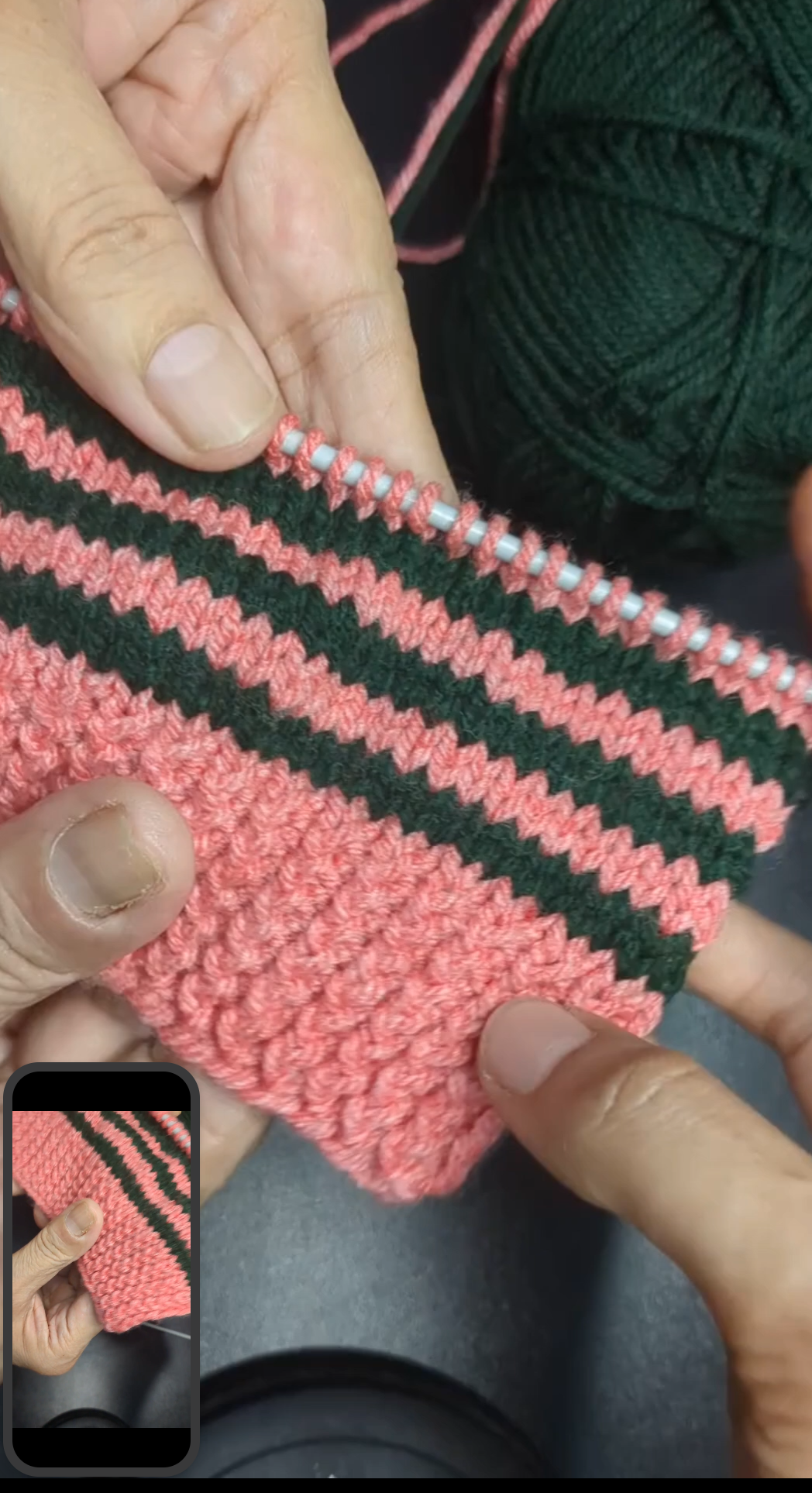
1: Stripes (H3)
Instructions (H4)
-
Knit a few rows using Color A.
-
Switch to Color B and continue knitting.
-
For narrow stripes: change colors every 2–4 rows.
-
For bold stripes: change colors every 6–12 rows.
Tips (H4)
-
Carry yarn up the side to avoid cutting too often.
-
Twist the two yarns once at the color change to prevent holes.
-
Use contrasting colors for best visibility.
Common Mistakes & Fixes (H4)
| Mistake | Fix |
|---|---|
| Loose stitches at color changes | Tug both yarns gently |
| Messy edge when carrying yarn | Twist yarns every 2–3 rows |
2: Color Blocking (H3)
Instructions (H4)
-
Choose one color for the body and another for the sleeves — or divide the sweater into large blocks.
-
Switch colors at a row boundary or a seam.
Tips (H4)
-
Great for modern, minimal, or trendy sweaters.
-
Works best with solid, non-variegated yarns.
-
Perfect for beginners.
Common Mistakes & Fixes (H4)
| Mistake | Fix |
|---|
| Sharp line looks uneven | Change color on a knit row, not a purl row |
| Gap at color join | Use “weave in as you go” method |
3: Fair Isle / Stranded Knitting (H3) (Intermediate)
Instructions (H4)
-
Knit with both colors in the same row.
-
Carry the unused yarn across the back (called “floats”).
-
Keep floats loose so the fabric doesn’t tighten.
Tips (H4)
-
Ideal for designs like snowflakes, Nordic patterns, hearts, or geometric shapes.
-
Hold one yarn in each hand for smoother tension.
-
Practice on a small swatch before starting a sweater.
Common Mistakes & Fixes (H4)
| Mistake | Fix |
|---|---|
| Fabric puckers | Stretch stitches lightly |
| Color dominance looks wrong | Keep main color in same hand throughout |
4: Intarsia (H3) (Large motifs)
Instructions (H4)
-
Use a separate small ball or bobbin for each color section.
-
Switch colors by crossing the yarns in the back to prevent holes.
-
Ideal for one big picture: flower, logo, letters, animals, etc.
Tips (H4)
-
Works best in flat knitting or cardigan fronts.
-
Keep yarn strands short and organized to avoid tangling.
-
Use stitch markers around the design area.
Common Mistakes & Fixes (H4)
| Mistake | Fix |
|---|---|
| Holes at color change | Twist yarns together when switching |
| Tangled yarns | Keep mini-balls in clips or small bowls |